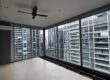

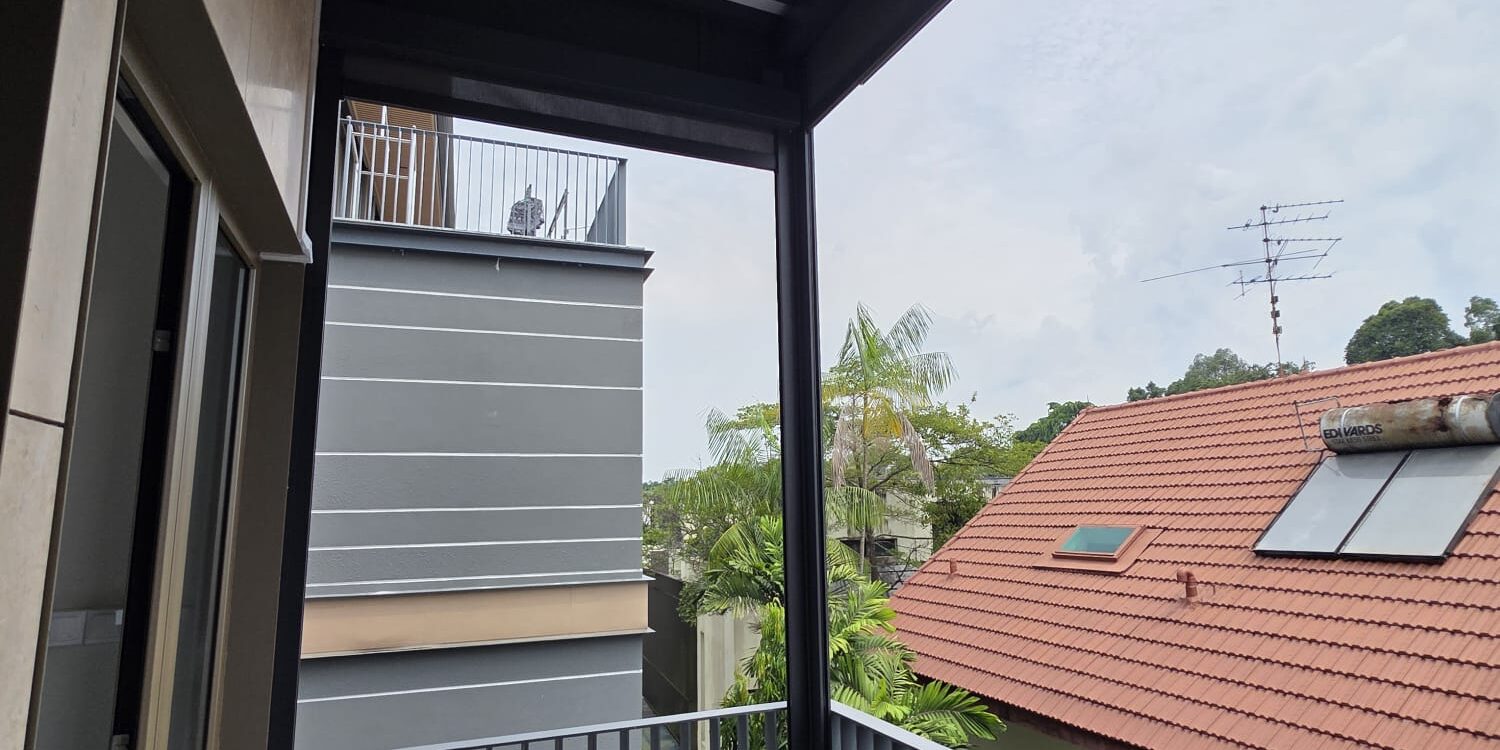
A balcony in Singapore is only as useful as its protection from the weather. Between sudden downpours, strong winds, and unforgiving sun, most balconies end up as storage space rather than a place to sit, eat, or relax.
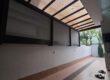
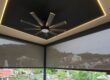
The most effective fix is combining a solid overhead roof with side blinds that seal off wind-driven rain: an aluminium composite roof paired with two motorized zip blinds. Together, they turn an exposed balcony into a room you can use in any season.
This guide covers why Singapore balconies need this upgrade, what the roof and blind combination does, and what to expect from planning through installation.
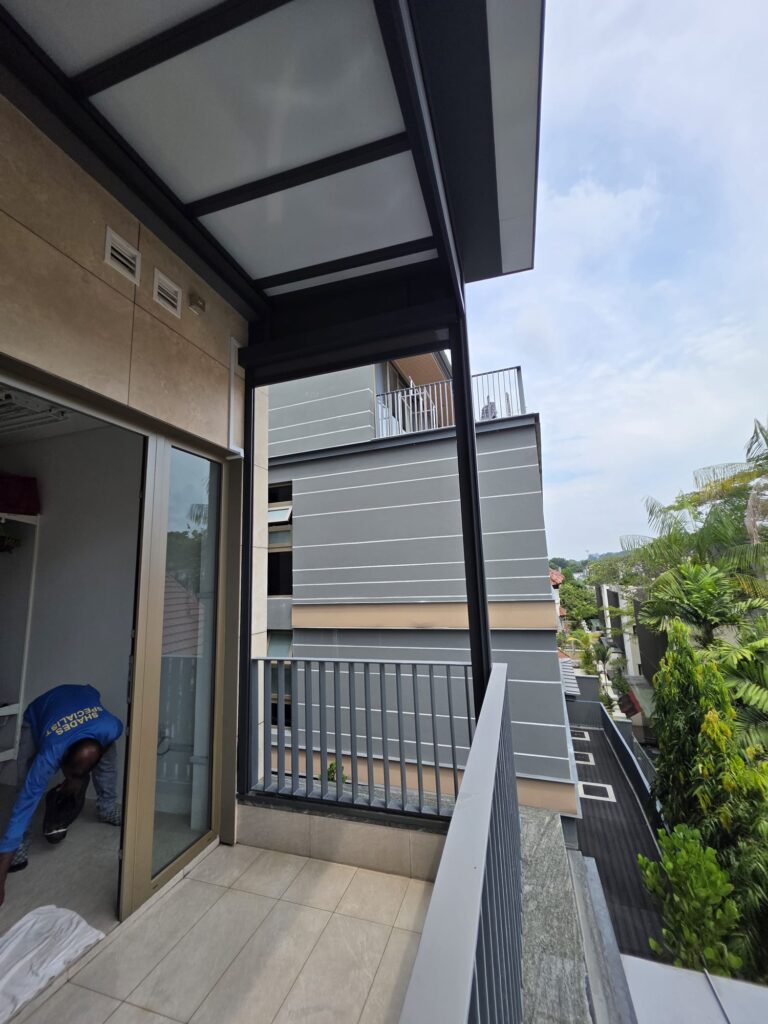
Why Singapore Balconies Need All-Weather Protection
Singapore’s climate doesn’t leave much room for an unprotected outdoor space. Rain can arrive without warning, humidity stays high through the year, and UV exposure is intense even on cloudy days.
A few problems come up again and again:
- Furniture, plants, and flooring take damage from repeated sun and rain exposure.
- Wind-driven rain reaches well past the edge of a standard balcony, soaking the interior even under a roof.
- Direct heat makes balconies unusable for most of the afternoon.
- Open balconies collect dust and debris quickly, adding to maintenance.
- Usable floor area sits idle when the space isn’t properly protected.
A roof alone solves the overhead exposure, but Singapore’s rain rarely falls straight down. This is why protection, usually in the form of zip blinds, matters just as much as the roof itself.
The Aluminium Composite Roof: The Foundation
An aluminium composite roof is built from a soft, absorbent core sandwiched between two layers of aluminium. This gives the panel a strength-to-weight ratio that outperforms most other roofing metals, while staying light enough for balcony structures not built to carry heavy loads.
For a balcony, this matters because:
- It’s durable and lightweight. The core bonding keeps the panel strong without adding excess weight.
- It resists weather extremes, holding up against heat, rain, and humidity without warping or corroding.
- It can come with a PVDF coating, adding resistance to heat, UV, and chemicals, plus sound dampening and thermal insulation. Useful for balconies facing busy roads or full sun.
- It’s low maintenance. Regular cleaning keeps it performing well over time.
- It’s customizable, fabricated to fit irregular balcony shapes and sizes, in colors and finishes to match the building facade.
The panel is solid rather than fabric or PVC, giving permanent, structural cover better suited to a balcony meant for daily use rather than occasional shelter.
Why Add Motorized Zip Blinds to the Roof
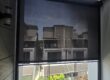
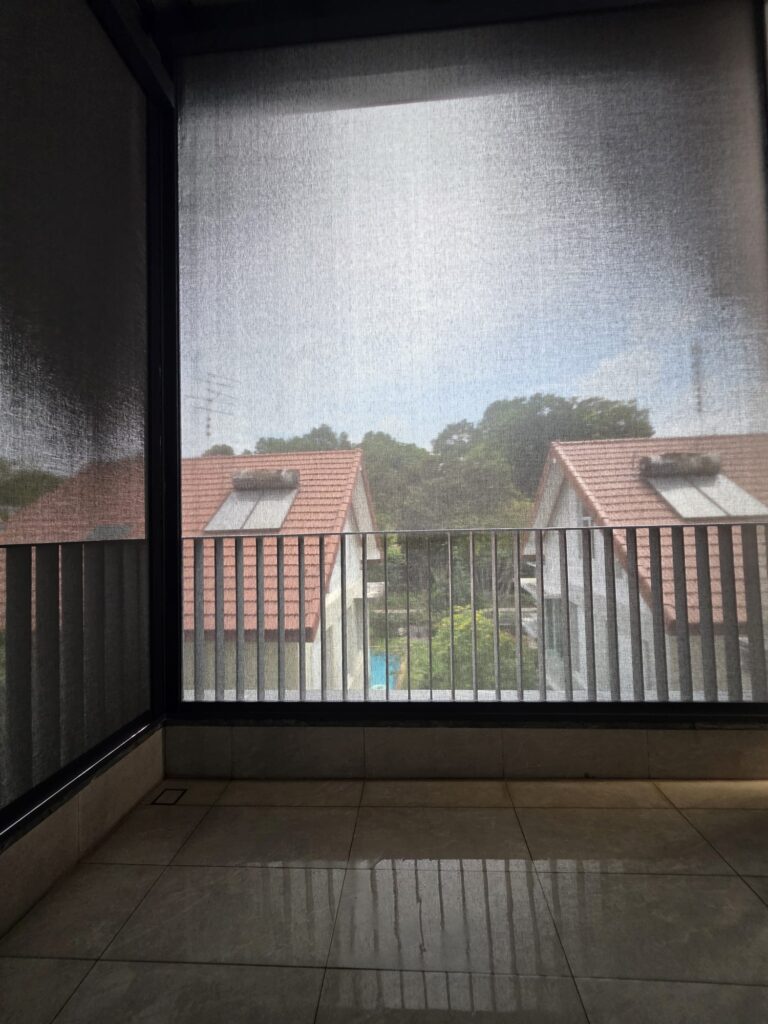
A solid roof handles what falls from above, but Singapore’s rain often comes in at an angle, driven by wind. That’s the gap zip blinds close. Installed along the open sides of the balcony, motorized zip blinds create a sealed guide track that keeps the blind taut, rather than flapping loose like a standard roller blind.
The features that matter most for wind and rain:
- High wind resistance, from the zip-guided track that keeps the fabric locked in place
- Rain protection up to maximum capacity, closing the gap a roof alone leaves open
- UV protection, cutting glare and heat without blocking the space off completely
- Air-con retention, useful if the balcony connects to an air-conditioned room
- Insect and dust barrier, keeping the space usable without constant cleaning
- Motorized operation, raised or lowered at the push of a button
Using two motorized zip blinds, one on each open side, closes off both angles of exposure while keeping the option to open the space up fully in clear weather. This is what makes the setup all-weather rather than just covered.
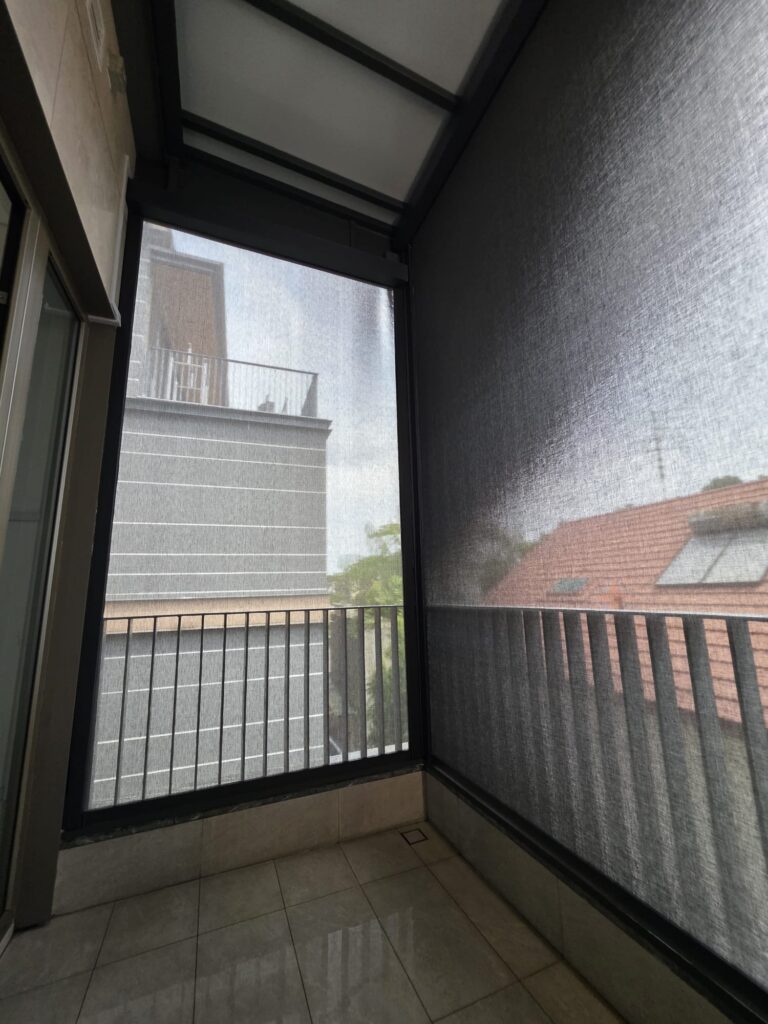
How the Combination Works Together
The roof and the two zip blinds function as one system:
- The roof is installed first, providing structural cover and anchoring points for the blind tracks.
- Two zip blind tracks are fitted along the open sides of the balcony, usually where wind-driven rain enters most.
- Motors are wired to a switch or remote, allowing the blinds to be lowered fully in bad weather or raised on clear days.
- Once installed, the balcony can shift from fully open to fully enclosed in under a minute, without manual effort.
This setup is particularly suited to:
- Condominium balconies with an open side facing wind and rain
- Landed property balconies used for dining or lounging
- Balconies that double as a home office nook or reading corner
- Spaces where furniture or a home gym setup needs year-round protection
What to Consider Before Installation
A few points are worth checking first:
- Balcony orientation: The side facing the prevailing wind and rain usually needs coverage most.
- Existing structure: Confirm the balcony can support the roof’s mounting points.
- Condo guidelines: Some developments restrict external alterations, so check first.
- Color and finish: Panels come in finishes to match the building facade.
- Motor placement: The blinds need a nearby power point, best planned during the site visit.
A short site visit from an experienced contractor usually answers these questions before installation begins.
SG Sunshade Guru: Your Partner for an All-Weather Balcony
SG Sunshade Guru Pte Ltd has been delivering and installing outdoor shade solutions for properties of all sorts, be they residential, commercial or industrial, across Singapore for more than 20 years.
The variety of products includes aluminium composite roofing, polycarbonate roofing, retractable awnings, canvas canopies, vertical roller blinds and zip blinds and indoor choices such as curtains, roller blinds, and Venetian blinds.
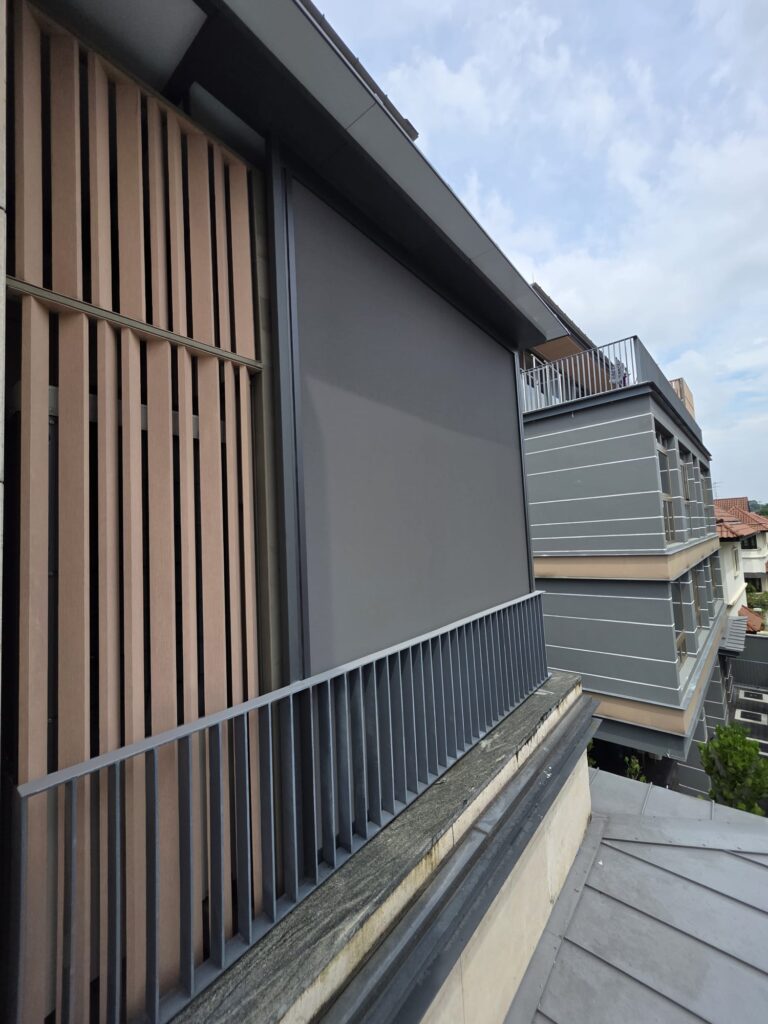
What Is Unique About the Company’s Approach?
- Tailor-made solutions: Each property is analyzed individually with bespoke roofing and blind systems to the form, size and design of the balcony.
- Established supplier relationships: Partnering with reputable awning and motorization manufacturers, which helps to maintain a consistent level of quality throughout projects.
- A full-service approach: This covers consultation, installation, and after-sales repair. Weather-tested products, built specifically for Singapore’s climate rather than adapted from designs meant for dry conditions.
- Affordability: Strong supplier relationships that keep pricing competitive.
An aluminium composite roof gives a balcony permanent, structural protection from sun and rain, while two motorized zip blinds close the gap that overhead cover alone leaves open. Together, they turn an exposed, underused balcony into a space that holds up through Singapore’s weather, whether that means a sudden shower in the afternoon or a still, humid evening.
For homeowners looking to get real, daily use out of their balcony, this combination is one of the more practical upgrades available, and one that pays for itself in the extra living space it creates.
If you’re considering this for your balcony, a site visit from SG Sunshade Guru is the simplest way to find out what fits your space and budget. Contact the team at +65 9018 8212 or sales@sg-sunshadeguru.com to get started.