
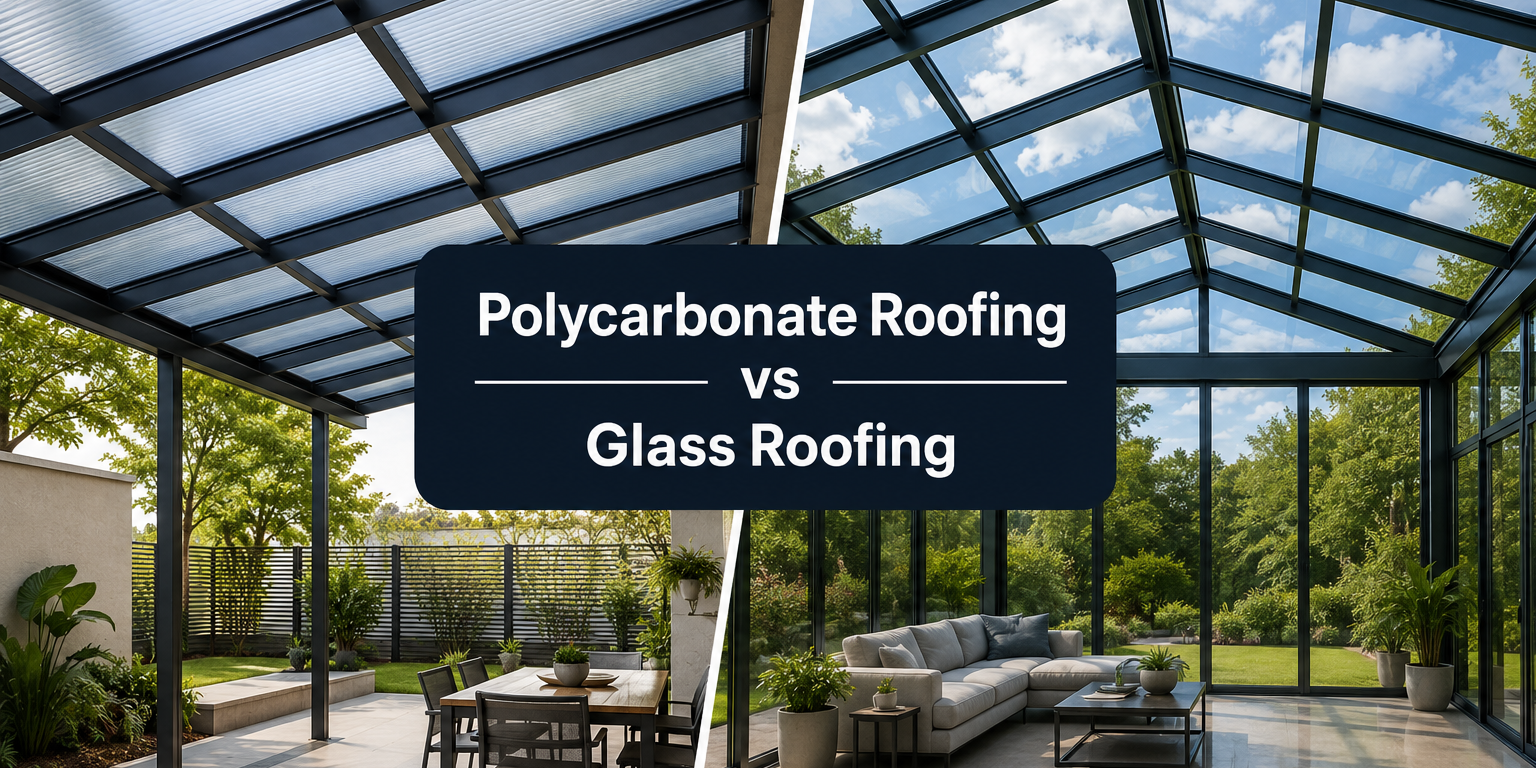
Picking a roof for an outdoor space is not as simple as it looks. Walk into any hardware store or speak to any contractor in Singapore, and two names will come up immediately: polycarbonate roofing and glass roofing.
Both let sunlight in and look presentable. But day-to-day performance is different for both of them. Singapore gets a lot of sun and rain. A roof that looks good but cannot handle that combination will cause problems within a few years.
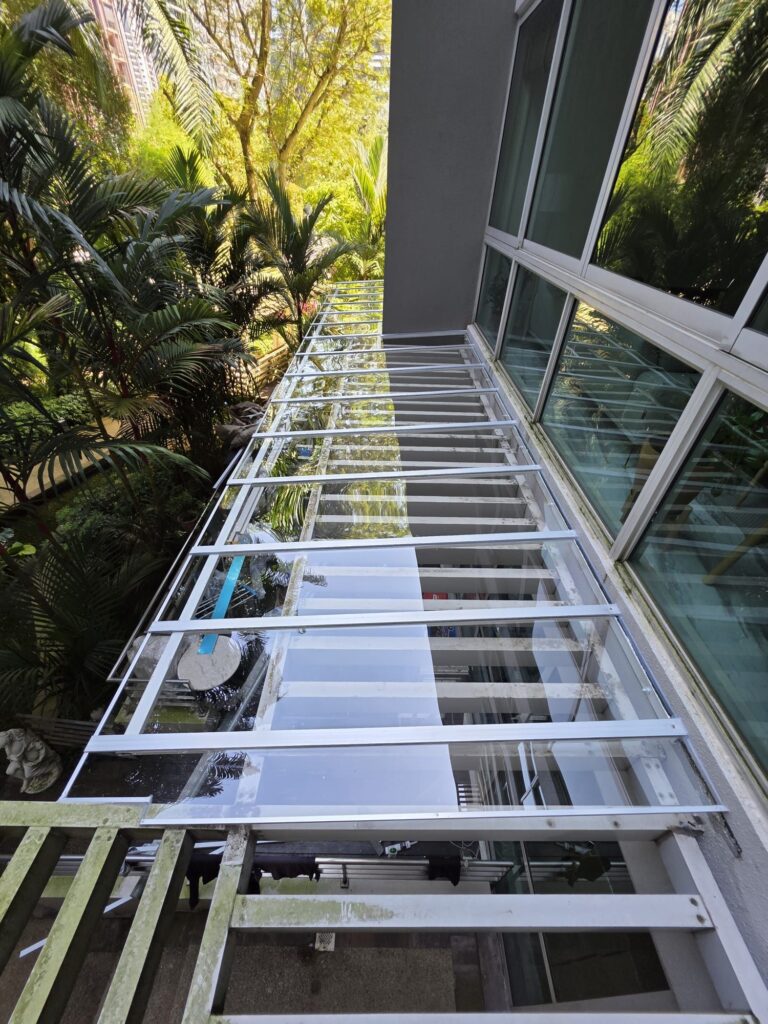
What Is Polycarbonate Roofing?
Polycarbonate is a plastic-based material. It is hard, light, and flexible enough to be shaped during installation. The sheets come in two main types: solid and hollow. Solid sheets are thicker and stronger. Hollow sheets have air pockets inside that help with insulation.
Whether it is a car porch, a patio, a pool cover, or a walkway, polycarbonate roofing fits a wide range of uses.
Also Read This: Top Polycarbonate Roofing & Retractable Awning Trends in 2026 for Heat Protection and Stylish Outdoor Living
What Is Glass Roofing?
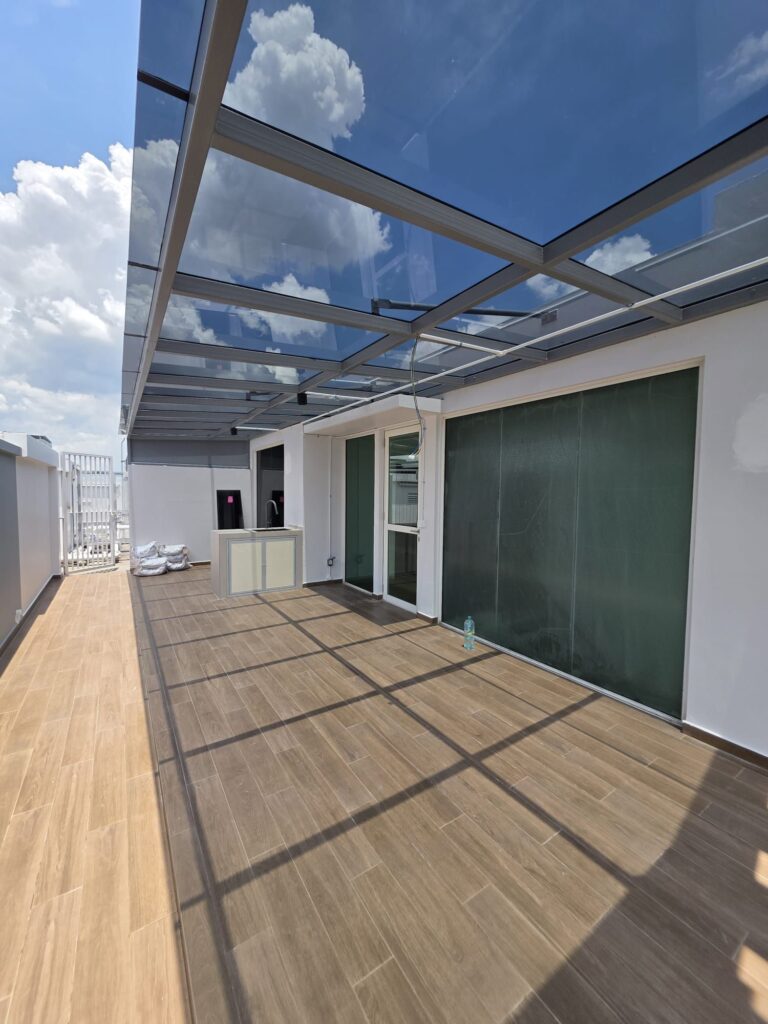
Glass roofing uses thick panels of tempered or laminated glass held in place by a metal frame. The look is clean and sharp. Conservatories, indoor gardens, and high-end commercial buildings often use glass roofing because of how premium it looks.
The downside is that glass is heavy, expensive, and harder to work with. It also behaves very differently from polycarbonate once the sun comes out.
How Do They Actually Compare?
Polycarbonate roofing and glass roofing are both popular roofing solutions. Let’s compare both of them on some key factors. Have a look at them to make the right choice:
1.Weight and Installation
These polycarbonate sheets weigh far less than glass sheets. The use of a lighter roof will reduce stress on the walls of the building, reducing its overall construction cost. Glass sheets are heavy and have high density. This will require a strong frame to support them.
2.Strength and Safety
Polycarbonate does not shatter. Even under strong impact, it bends before it breaks. This makes it a safer option for outdoor spaces, especially in areas where children play or where falling debris is possible.
Glass, even tempered glass, can crack and shatter. A shattered glass roof panel is a safety risk that polycarbonate simply does not carry.
3.UV and Sun Protection
This is one of the biggest differences between the two. Polycarbonate roofing filters out nearly all UV radiation while still allowing natural light through. This protects people sitting below, as well as furniture and flooring that would otherwise fade over time.
Standard glass lets UV rays pass through unless it has been specially treated. That treatment adds to the cost, and even then, the UV protection may not match what polycarbonate offers as standard.
4.Heat Buildup
Anyone who has sat under a glass roof on a sunny Singapore afternoon knows how hot it gets. Glass absorbs and holds heat. The air below can become very uncomfortable without additional ventilation or cooling.
Hollow polycarbonate sheets do a better job of slowing down heat transfer. The space below stays cooler compared to glass, which makes a real difference in daily comfort.
5.Cost
Polycarbonate roofing costs less than glass roofing on almost every count. The material itself is cheaper. Installation is faster. The supporting structure does not need to be as heavy. For homeowners and business owners watching their budget, polycarbonate gives solid value without cutting corners on quality.
Glass roofing involves premium pricing across the board. Material, framing, installation labor, and any special coatings all add up quickly.
6.How It Looks
Glass has a cleaner, more high-end appearance. For spaces where the visual design is the main priority, glass can make a strong impression.
Polycarbonate does not have quite the same premium finish, but it still looks neat and professional. Most people walking under a well-installed polycarbonate roof would not find anything to complain about.
7.Cleaning and Upkeep
Glass picks up marks easily. Watermarks, dust, and fingerprints all show up clearly on a glass surface. Keeping it clean takes regular effort.
Polycarbonate is easier to maintain. A simple wipe-down keeps it in good condition. It does not show marks as easily, which means less time spent on cleaning.
8.Long-Term Durability
Both materials can last for many years when installed properly. The polycarbonate sheets are color-stable and treated to resist fading and UV degradation. Glass can last just as long under normal conditions, but one hard impact can mean a full panel replacement.
Which One Suits Your Space?
Polycarbonate roofing makes more sense when:
- The space needs daily weather protection from the sun and rain.
- Budget plays a big role in the decision.
- UV protection and cooler temperatures under the roof are important.
- The space to be covered includes a car porch, patio, pool cover, walkway, or outdoor entertainment space.
When to Consider Glass Roofing:
- Conservatory or luxury indoor extension.
- Full visual transparency and a high-end finish are non-negotiable.
- The budget is not a limiting factor.
For the large majority of homes and commercial properties in Singapore, polycarbonate roofing is simply the more sensible choice.
SG Sunshade Guru Pte Ltd: Trusted Polycarbonate Roofing Experts in Singapore
SG Sunshade Guru Pte Ltd is a roofing and awning contractor based in Singapore. The company supplies and installs polycarbonate roofing for residential, commercial, and industrial properties. Both solid and hollow sheet options are available, and every installation is tailored to the size and layout of the specific space.
The team brings years of experience across Singapore and handles projects ranging from small car porches to large commercial outdoor spaces.
Quality materials, proper installation, and straightforward service are what the company is built on.
Also Read This: Common Residential Applications of Polycarbonate Roofing
Conclusion
Glass looks good and aesthetic as a roofing solution. But when the roof has to deal with strong tropical sun, sudden heavy rain, and years of outdoor exposure, polycarbonate holds its ground far better. It weighs less, costs less, blocks more UV, and stays safer if something hits it. Maintenance is simpler, too.
Glass has its place, mostly in spaces where the look matters more than anything else and where money is not a concern. But for practical, everyday outdoor roofing in Singapore, polycarbonate is the more reliable option.
The material chosen matters, but so does who installs it. A roof is only as good as the workmanship behind it.