
A penthouse terrace is one of the best parts of a high-rise home. You get open sky, long views, and room to breathe. But height brings trade-offs. The sun feels stronger, rain can blow in sideways, and neighbouring towers may have a clear line of sight to your seating area.
Many owners end up with a beautiful space they rarely use. It is too bright at noon, too wet after a storm, and too exposed to sit in comfortably.
A well-planned roof fixes most of that. One material that suits the job is the aluminium composite panel, often shortened to ACP. This post explains what it is, how it works on a penthouse terrace, and what to ask before you build.
What Is Aluminium Composite Roofing?
An aluminium composite panel is made in layers. A soft core, usually plastic, sits between two sheets of aluminium. The aluminium gives protection and durability. The bonded core keeps the panel light.
This mix makes it a practical roofing material for homes and commercial buildings. It is also used for framing, walling and cladding.
Here is what stands out about ACP:
- A strong strength-to-weight profile, so it is sturdy without being heavy
- Resistance to heat, UV, and chemicals
- Thermal insulation and soundproofing
- Less metallic clanging than a plain metal sheet
- A wide choice of patterns, types and colours
- Custom sizes and shapes to fit the space
How ACP Roofing Improves Privacy
Privacy in a penthouse is not only about side walls. When towers stand close by, the roof and the edges shape how exposed you feel.
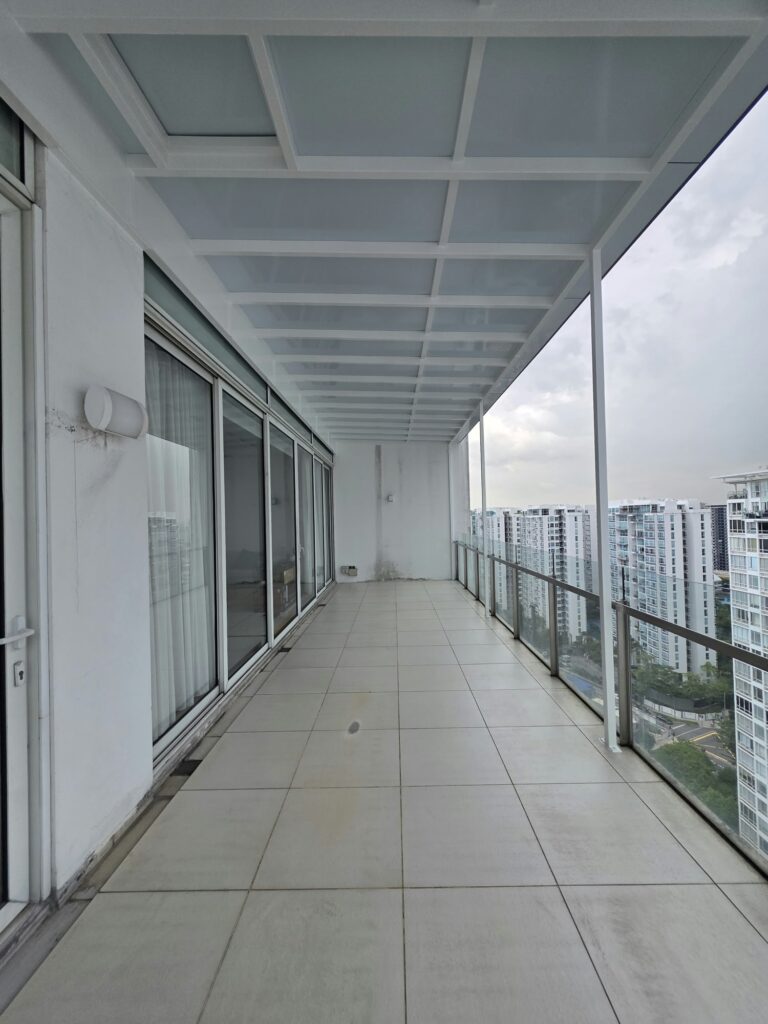
SG Sunshade Guru builds custom solutions around heat, glare, and privacy, along with the need for added usable space. A solid panel roof is a natural fit for that brief. It closes off the area overhead and gives the terrace a more defined, room-like feel.
Because ACP can be fabricated to many shapes and sizes, the roof can follow the exact outline of your terrace. It does not have to be a standard rectangle. Colour choice also matters. Darker or neutral panels can sit quietly against the building and keep attention on the view.
A Look at the Seaview Penthouse Project
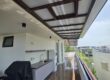
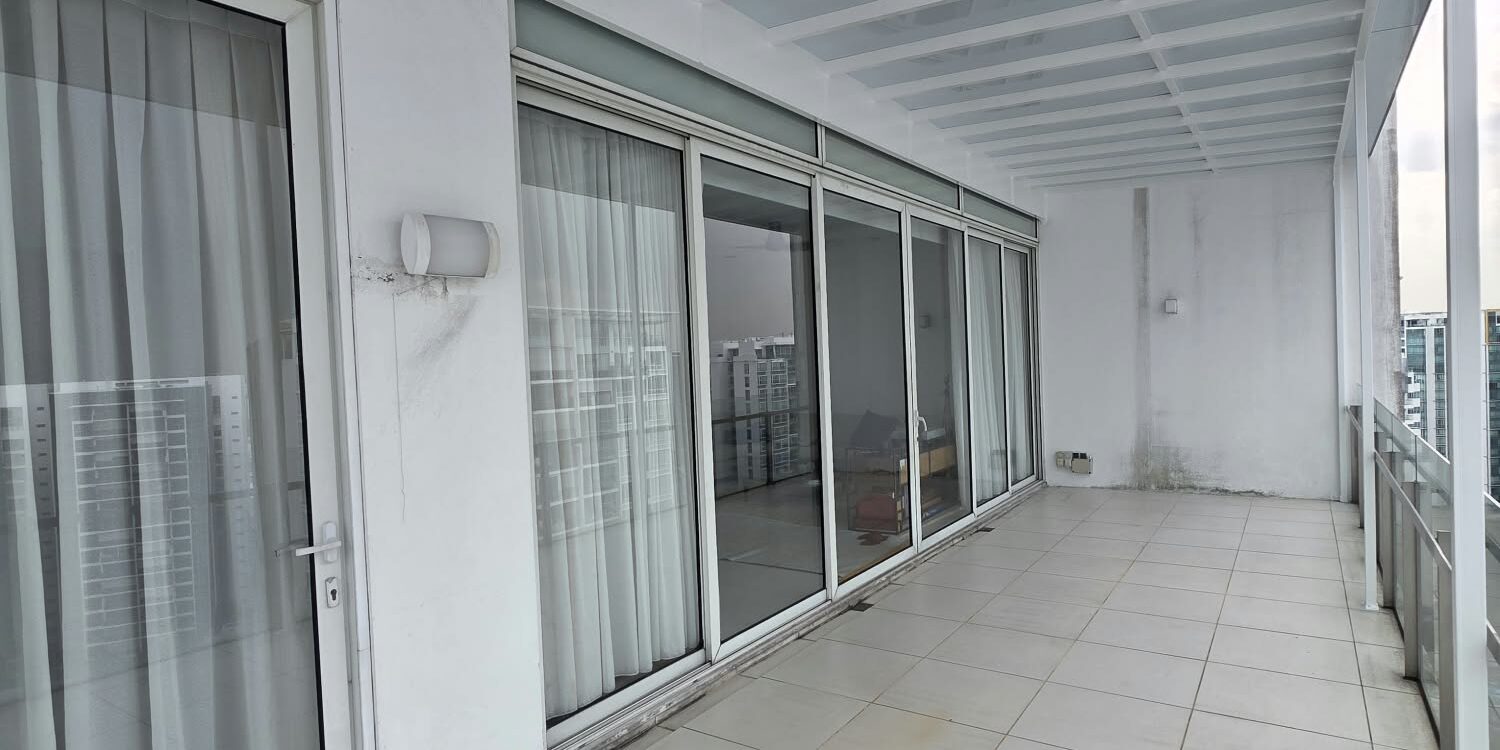
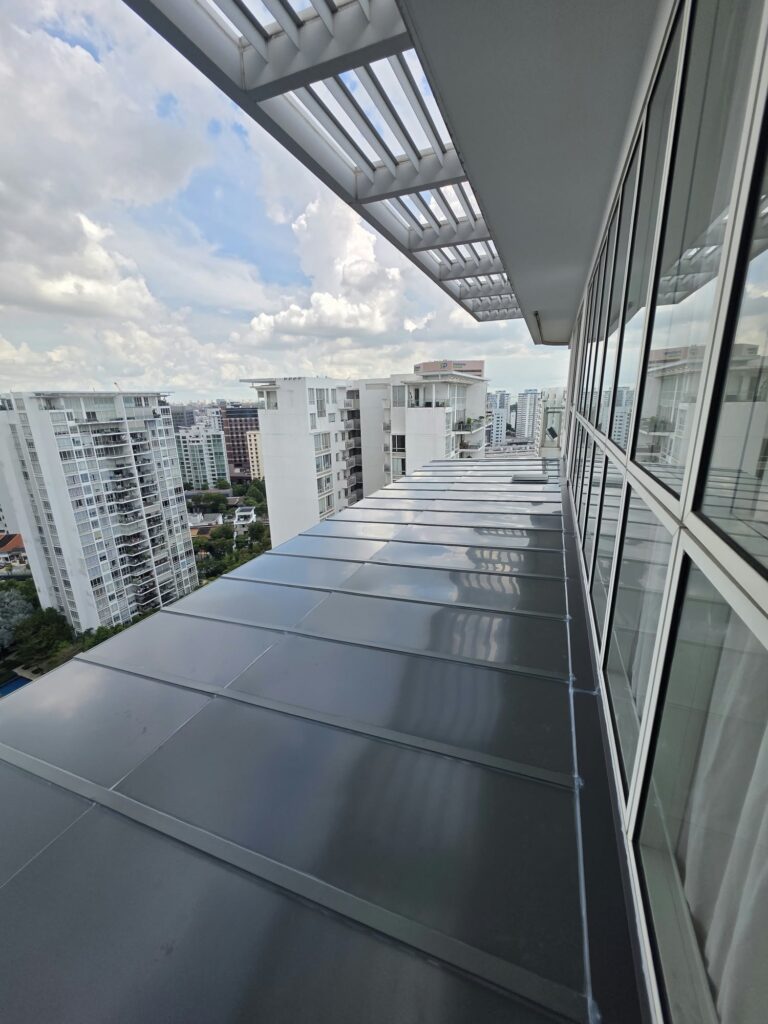
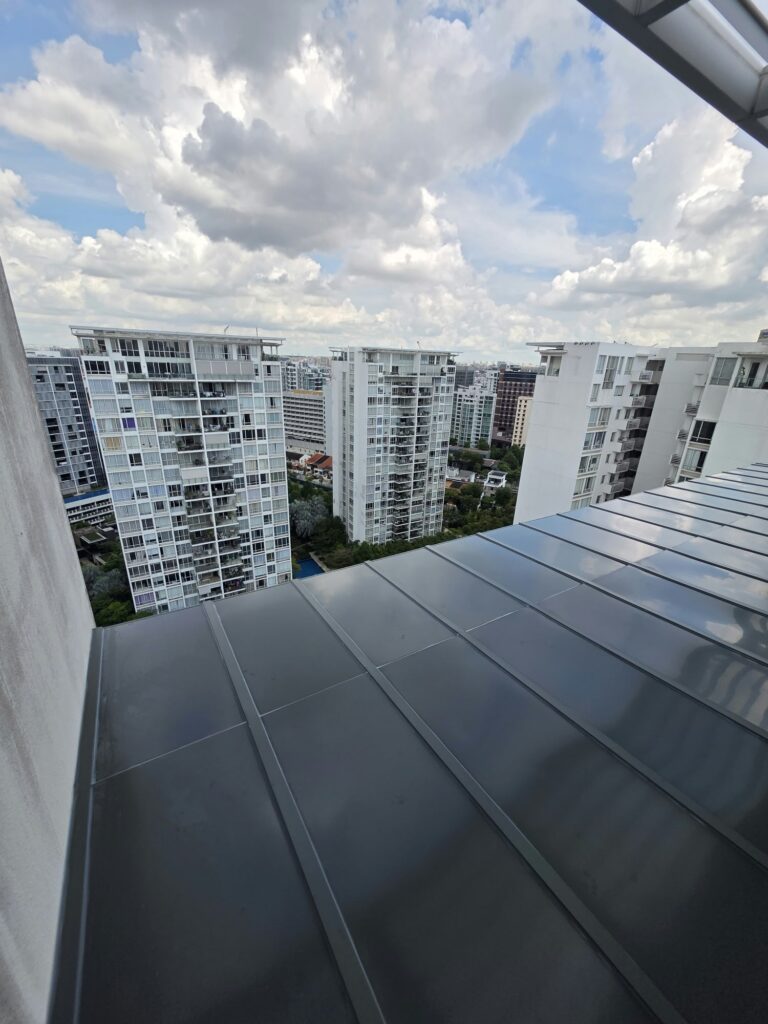
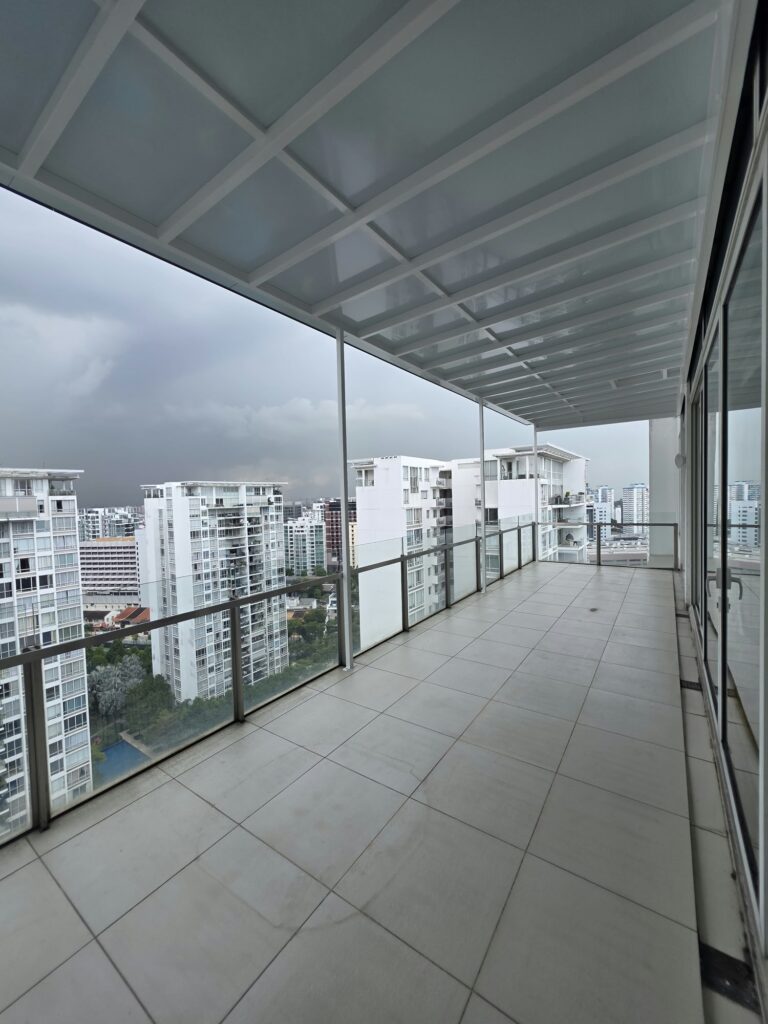
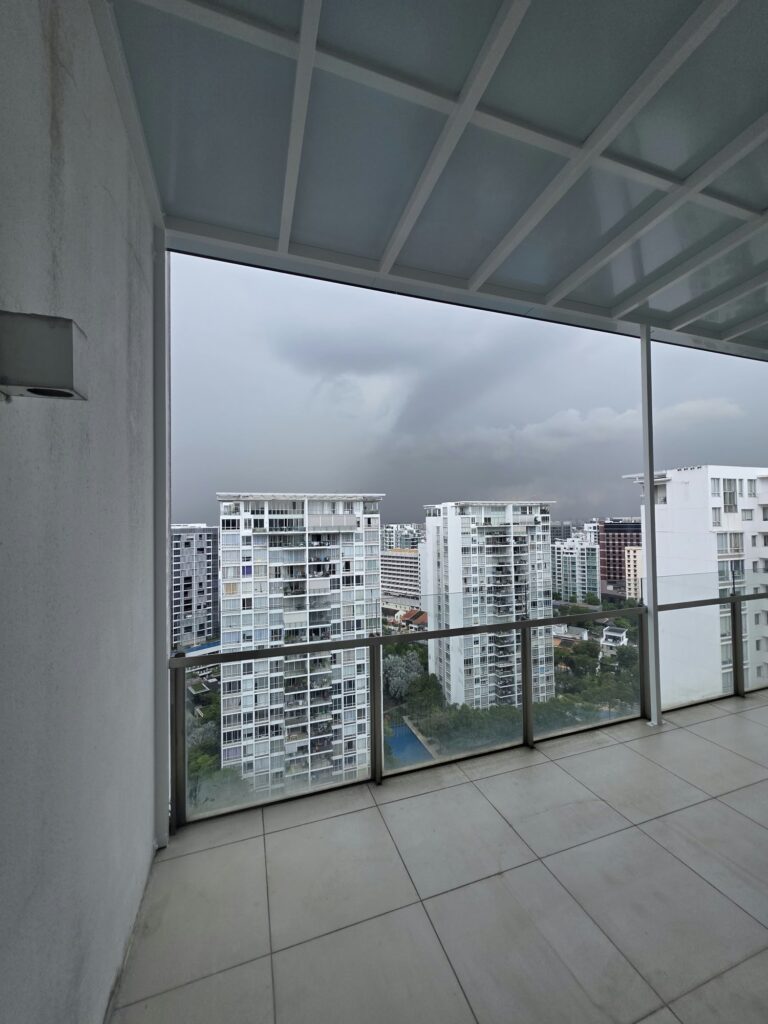
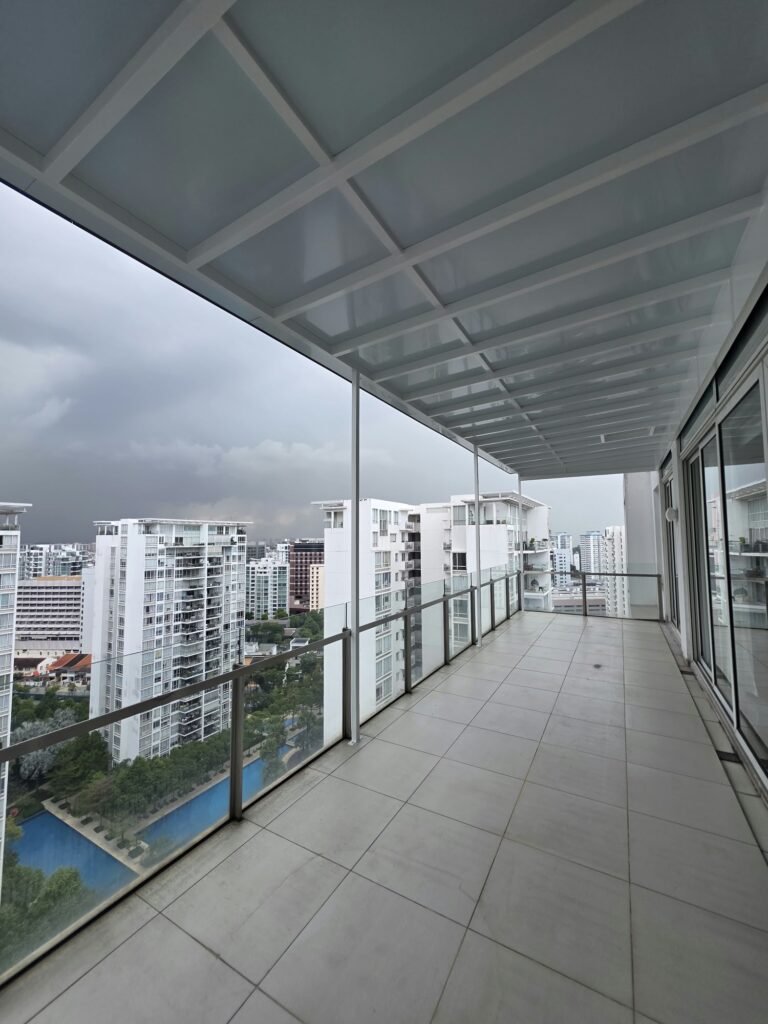
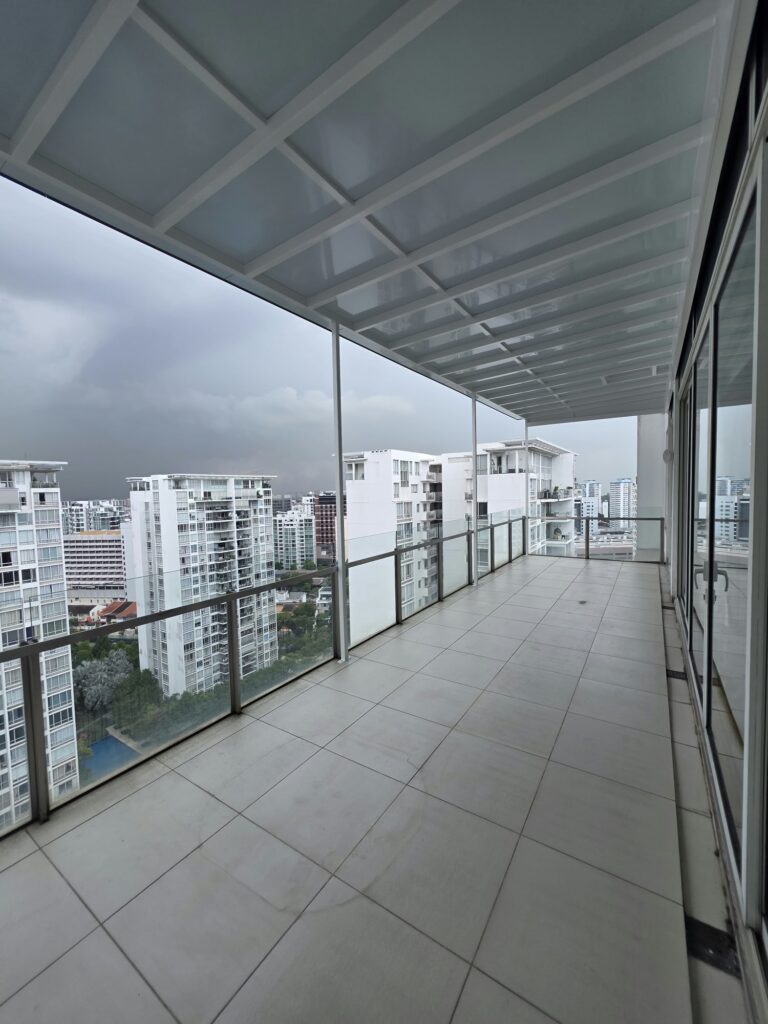
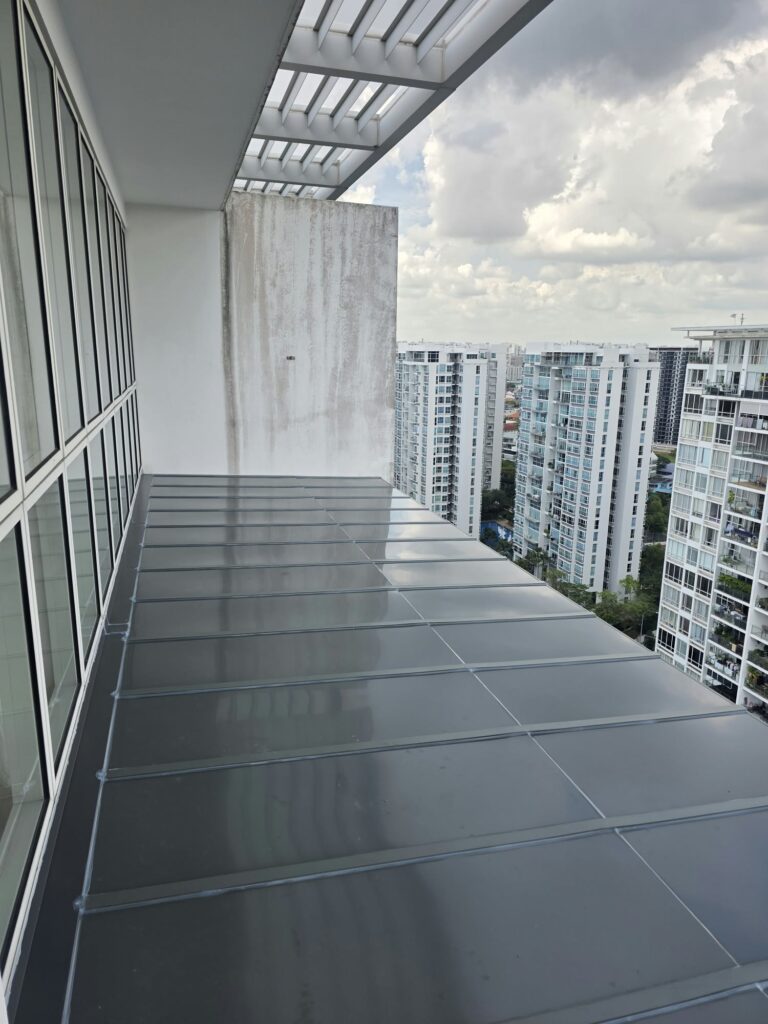
The Seaview penthouse project shows how this works on a long outdoor stretch. The roof runs along a narrow balcony beside a glass-fronted wall. Dark composite panels cover the length of the space, and the panel lines are clean and even. Near the building edge, a slatted section lets the roof end in a lighter pattern.
Around it, you can see the surrounding high-rise blocks. That is exactly the setting where overhead cover helps. The balcony stays open to the view at the side, but the roof gives shelter and a sense of enclosure above.
Shade That Works in a Tropical Climate
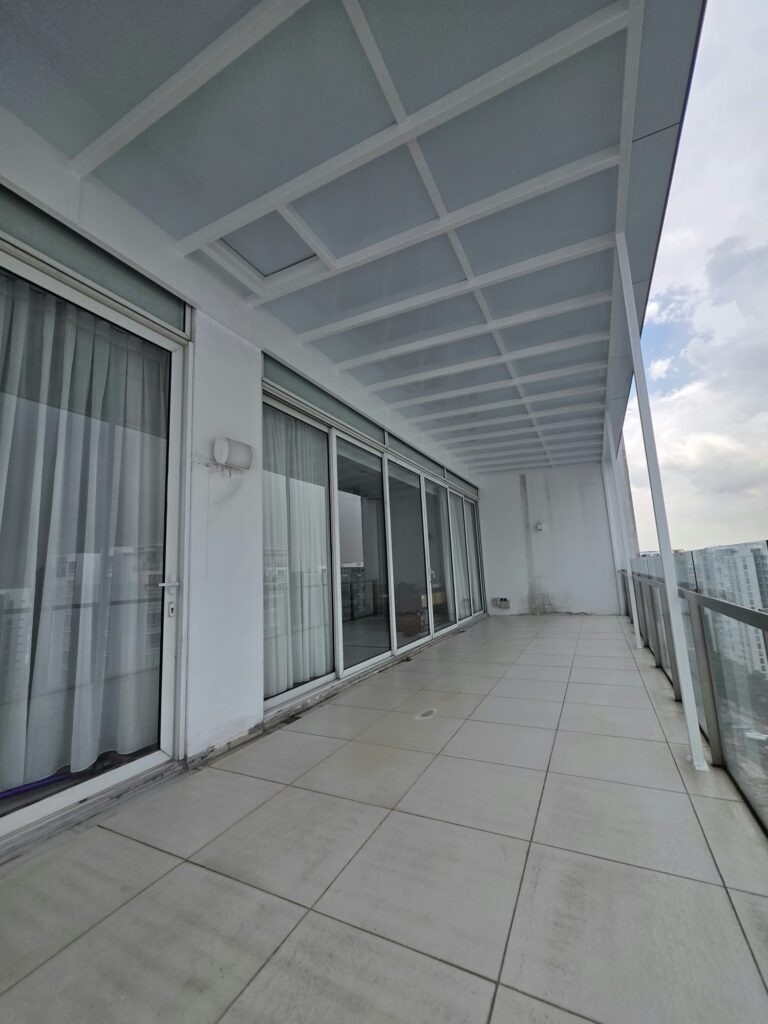
Strong sun is the first complaint most penthouse owners have. SG Sunshade Guru is familiar with Singapore’s tropical conditions and designs shade solutions to reduce UV exposure.
ACP helps in a few ways:
- The panels resist heat and UV, so the roof is built for steady sun
- Thermal insulation helps limit how much heat passes through
- A solid surface blocks direct sunlight from above
- The roof can be sized to cover the full seating or dining zone
The result is a terrace you can step onto in the afternoon without squinting or retreating indoors.
Comfort in Rain and Noise
Singapore weather can change fast. A sunny hour can turn into a downpour, and a roof lets you keep using the space either way.
ACP is described as weather-resistant, made to protect a structure against extreme conditions. Beyond rain cover, two other features add to comfort:
- Soundproofing: The panels help soften noise, which is useful on a high floor where wind and rain can be loud.
- Reduced metallic clanging: Raindrops on a thin metal roof can be noisy. ACP is noted for cutting down that sound.
The combination makes a terrace calmer and easier to enjoy, rain or shine.
Where PVDF-Coated ACP Can Be Used
When panels are combined with PVDF coating, they suit several roofing needs. The coating is offered in a range of colours.
The applications include:
- Buildings
- Awnings
- Roofing
- Shelters
- Walkway shelters
For a penthouse, the roofing and awning uses are the most relevant. The same material can also be used elsewhere on the property if you want a matching look.
Design Options and Installation
No two terraces are the same, and the right roof depends on the space. SG Sunshade Guru starts by assessing the exact needs of the client, then creates a tailored solution. The team has more than two decades of experience in the industry.
A few things to think about before you decide:
- Shape and size: Panels can be made to fit odd corners and long, narrow balconies.
- Colour and pattern: Choose a finish that suits your building and furniture.
- Purpose: Decide whether your main goal is shade, privacy, rain cover, or all three at once.
- Style: ACP is also used for decorative façade work, so the roof can look polished, not just practical.
Installation does not drag on. The panels go in with only a few steps by experienced installers.
Care and Maintenance
Looking after an ACP roof is simple. Regular cleaning keeps the panels working well and helps them last longer.
That matters on a penthouse, where access can be awkward, and nobody wants a complicated upkeep routine.
FAQs (Frequently Asked Questions)
1. What is an aluminium composite panel made of?
It has a soft core, usually plastic, between two layers of aluminium. The layers are bonded together into one light, durable panel.
2. Is ACP roofing suitable for homes?
Yes, it is used on both residential and commercial properties, and it is suitable for roofing, awnings, shelters, and porches.
3. Can the roof be made to fit a custom shape?
Yes, panels can be customised and fabricated in many shapes and sizes.
4. How do I maintain it?
Regular cleaning is enough to keep it working well.
5. Does it help with heat and sound?
The panels offer resistance to heat and UV, thermal insulation, and soundproofing.
6. What else does SG Sunshade Guru offer?
The range includes retractable awnings, polycarbonate roofing, vertical roller blinds, canvas canopies and zip blinds. If you want a mix of materials on one terrace, the team can advise on it.
Summary
A penthouse terrace should be a place you want to be in, not just look at. Aluminium composite roofing helps get it there. The panels give shade, resist heat and UV, and stand up to wet weather. They also quiet the space, and they can be shaped to give a terrace more privacy and a finished look.
The Seaview penthouse project is a good example of how a long, exposed balcony can become a sheltered outdoor room. Combined with a custom approach and simple upkeep, ACP is a practical choice for high-rise living.
Planning a roof for your penthouse terrace? Talk to SG Sunshade Guru about your space and ask for a free quote.